One Year in Acute Psychiatry: Finding the Power of Art Therapy in the Hospital
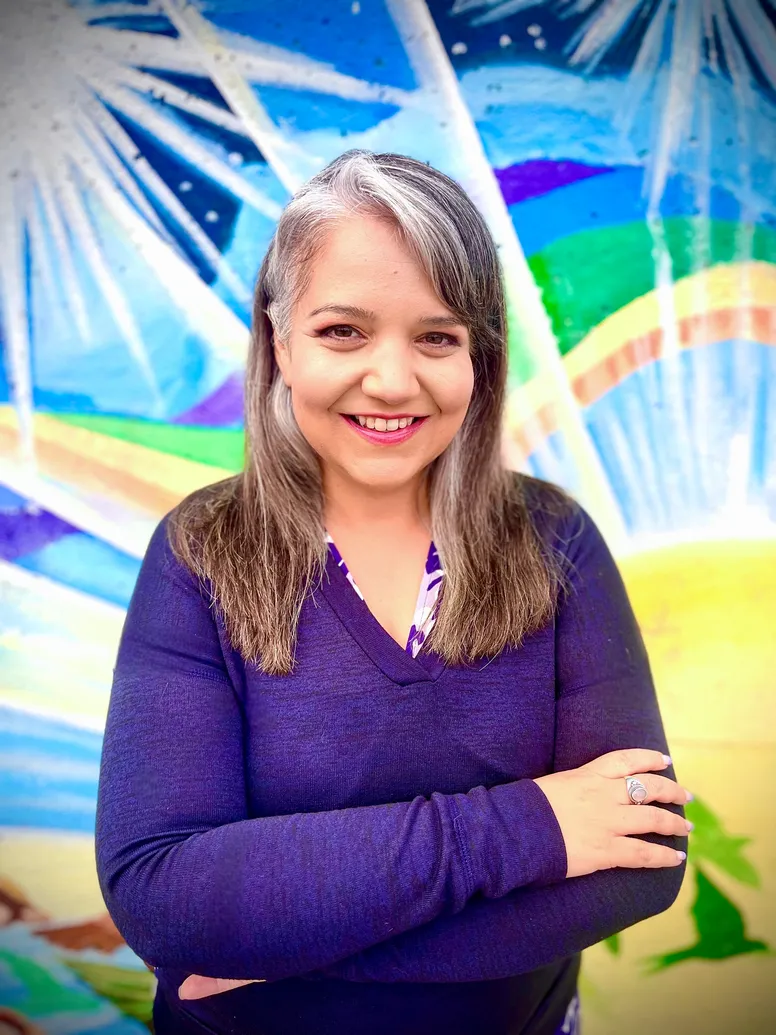

One year ago, I stepped into a role that, years earlier, I had been too afraid to accept.
While I was in graduate school, I had the opportunity to intern in an inpatient psychiatric setting. At the time, I heard a lot about the intensity of psychiatric units, the acuity of the patients, and the challenges of working in that environment. I absorbed some of that fear and stigma, and ultimately decided not to take the placement.
So when I was offered the opportunity to join East Bay Art Therapy’s hospital team years later, I noticed those old nerves coming back.
Could I really do this?
I had been working as an art therapist for a decade. I had clinical experience, training, that also included working in a non-psychiatric hospital setting. I decided to trust my experience, my training, and my capacity to learn. A year later, I can honestly say: I am so glad I did.
What Does an Art Therapist Do in an Inpatient Psychiatric Unit?
Working in acute psychiatry means meeting people during some of the most difficult and vulnerable moments of their lives. As an art therapist, my role is not simply to “make art.” Art therapy provides another pathway for people to explore, express, and communicate experiences that can sometimes be difficult to put into words. In an inpatient setting, patients may be experiencing intense emotions, severe mental health symptoms, fear, uncertainty, shame, or a sense of losing control over their circumstances. Some patients are hospitalized voluntarily, while others are involuntarily. For adolescents in particular, being in a hospital can feel especially disruptive and frightening.
There can also be tremendous stigma attached to simply being in a psychiatric hospital.
Sometimes the first step is creating space to talk about that.
What does it mean to be here?
What stories have we been taught about people who need psychiatric care?
What feelings come up when we hear the words “psych unit”?
Shame? Fear? Embarrassment? Anger? Relief?
Part of my role as an art therapist is helping create a space where those feelings can exist without judgment. I believe that seeking care for our mental health is not a failure. It can be an act of self-care, courage, and resilience.
Creating Choice When Choice Feels Limited
One of the things I value most about art therapy in an inpatient setting is choice.
When someone is hospitalized, many aspects of their environment may no longer be within their control. There are schedules, rules, medications, appointments, milieu therapy, and decisions being made around them.
Art-making offers an opportunity to reclaim a small piece of agency.
Which materials do you want to use?
What colors feel right for you?
Do you want to tear, scribble, draw, sculpt, collage, or simply experiment?
Always giving choices in creative explorations. Even seemingly simple choices can become meaningful. Through art therapy, patients can experience themselves as active participants in their own process rather than recipients of care. What I love most is witnessing the moment a patient shifts from feeling disconnected to truly owning their inner voice. Through art therapy, they’re able to release and express what’s been held inside, and you can see their sense of self-agency come back online.
Art Doesn't Always Need Words
One of the most powerful parts of this work is witnessing what happens when an internal experience becomes something tangible. A scribble can hold anger. A color can communicate sadness. A torn piece of paper can represent something that feels lost. A sculpture can give form to something that has been difficult to explain.
A patient may create something and suddenly recognize, “This is what I've been feeling.” And sometimes that artwork becomes a bridge between the patient and their treatment team.
I remember a patient, where the art directive was transitions and to draw their journey, who was exploring different “parts” of herself and struggling to communicate what was happening internally. Through her artwork, she created a surprisingly clear visual representation of those internal experiences. The artwork gave her something tangible to point to and helped her communicate with her treatment providers about what she was experiencing. The art didn't replace verbal communication, it supported it. That is one of the unique powers of art therapy.
Play, Imagination, and the Inner World
Some of the art therapy directives that patients gravitate toward most are surprisingly playful. And I think there is something important about that. Life can be incredibly serious, particularly for someone experiencing a mental health crisis. Creating an opportunity for curiosity, imagination, and play can provide a temporary space away from the weight of everything happening around them. With adults & adolescents, for example, I have used superheroes and villains as a way to explore strengths, vulnerabilities, and personal challenges.
Patients can create their own superhero and/or villain and consider: Their strengths, vulnerabilities, and challenges through exploring a character on its own and making a comic strip to portray their inner experience. Often times, to witness their resiliency in realizing that their weakness could actually become a strength. And that so called defeats are not failures, but opportunities to learn more about themselves and grow.
What begins as a playful conversation about superheroes can become a surprisingly meaningful exploration of identity, self-esteem, resilience, and the parts of ourselves we sometimes want to hide.
Another Art Therapy directive I find patients enjoy is inviting them to explore their identity and survival through animals. They may choose an animal or even combine several animals that they feel connected to, and then create their own unique species.
Play becomes a way of reconnecting with parts of ourselves that may have been overshadowed by stress, fear, or survival. The exploration often becomes much more than choosing a favorite animal. What qualities do they admire? What does this animal represent to them? How does it survive, move through the world, protect itself, or relate to others? For example, someone may value the versatility of an animal that can move between different environments, walking on land, diving into the ocean, or soaring through the sky.
These qualities can become metaphors for how they see themselves or how they hope to live in their everyday lives. Through imagination, patients can explore their values, strengths, identity, and possibilities in a way that may feel less intimidating than being asked directly, “Who are you?” or “What matters most to you?”
Sometimes the Smallest Moments Matter Most
In an acute psychiatric setting, engagement can look very different from person to person. Of course, having someone fully participate in an entire art therapy group can be meaningful. But sometimes the most impactful moment is much smaller.
Someone picks up a piece of paper, chooses a color, makes one mark.
Someone sits quietly and watches. Someone creates an image that says something they haven't yet been able to say aloud. Those moments matter.
Art therapy doesn't require someone to have the perfect words or even to understand exactly what they are experiencing. It can simply offer another place to begin.
A Creative Arts Community
One of the greatest gifts of this past year has been discovering the sense of community within the hospital and within EBAT's Creative Arts Team. I have had the opportunity to work alongside passionate professionals who care deeply about providing quality, compassionate care. Being part of a creative arts team that includes art, drama and music therapists has reinforced for me how powerful interdisciplinary care can be. The nursing and hospital staff have also taught me so much about working within an acute psychiatric environment. This work requires flexibility, communication, collaboration, and a willingness to continually learn.
It is not always easy. There are stressful days. There are complicated situations. There are moments when the acuity of the environment is very real. But there are also moments of connection, humor, creativity, insight, and humanity. And those moments are why I continue to believe in this work.
One Year Later
Looking back, I think about the graduate student who once heard the words “inpatient psych” and felt afraid. I wish I could go back and tell her that fear doesn't necessarily mean don't do it. Sometimes fear means: This is unfamiliar. This matters to me. I am about to grow. A year in, I have learned that working in acute psychiatry requires both clinical skill and humility. It requires us to see the person beyond the diagnosis, to challenge stigma, to create opportunities for agency, and to meet people where they are. And it has reminded me why I became an art therapist in the first place.
Because sometimes healing begins with a conversation. And sometimes it begins with a blank piece of paper, a handful of colors, and the freedom to create something that didn't exist before.
I am grateful to have spent this past year witnessing those beginnings.
Written by EBAT Art Therapist: Sophia Stutes, MA, ATR, AMFT


Comments